
The Recommendation Suites, Vol.1/#1 - Station Model Violence "Station Model Violence"

The Recommendation Suites Vol. 1/#1

This series is culled from recommendations given to me by friends, family, acquaintances, coworkers, fellow music dorks and casual fans alike. The only really prerequisite I give when fielding these recommendations is that it must be from this calendar year. All genres are welcome in the Recommendation Suites.
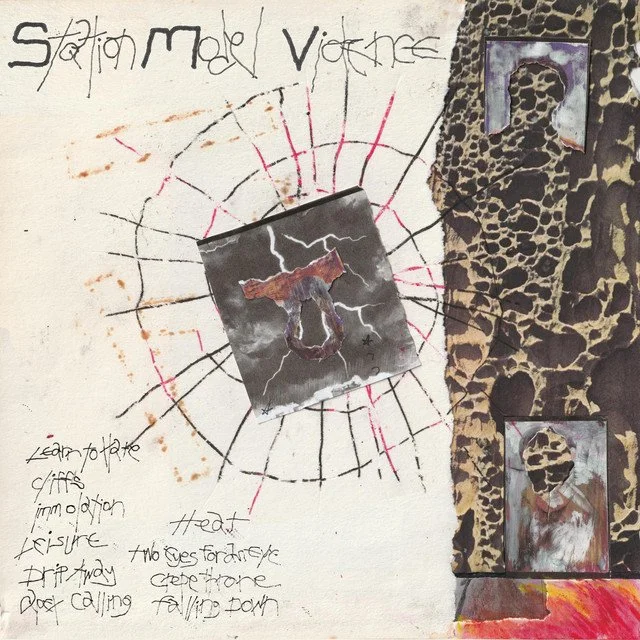
The album: Station Model Violence – Station Model Violence

The recommender: Daniel Makabe. Guitar player. Retired Wrestling Genius. Coffee enjoyer. Past answerer of 5 Questions with Rags.

This album is, quite frankly, fucking relentless. It's energy frantic and kinetic. Station Model Violence moves and moves and moves but not in a way that I often move – the effect is at times dizzying, terrifying and exhilarating. Often all three at once.

These songs move so relentlessly. (Less than 50 words in and I've used “relentless” twice. It really is the word that my mind keeps coming back to on every listen.) There's a joyousness that leaks and eventually bursts from these songs, but it's joyous that quickly feels poisonous, almost suffocating, every time because there is it leaves so little room to breathe. Take “Two Eyes For An Eye” - almost dirge-like, the song chokes out the listener with a plodding, methodical momentum, droning vocals and the most nakedly violent lyrics on the record. Instead of that methodical momentum continuing up to rising action, everything just kind of falls away, like stepping off a cliff, with only pulsing, looping guitar noises suspending you in the air. (Falling off a cliff is a feeling that permeates this album. There's even a song called “Cliffs.”) At first this feels like a reprieve from the earlier terror, but it moves like an inescapable fog. And a hot, stifling fog at that, not one of those nice early morning fall fogs that refresh the lungs. This is just an example. Every reprieve from the assault on this record ends up feeling like poison right into the ear canal.

There are little bits of sound, sonic flourishes that delight my ears in amongst the endless, thumping rage of this record. The saxophone at the end of opening track “Learn To Hate” is falling onto a cloud at the end of a death drop off a cliff. (Hey, it's that damned cliff again!) The weird noises at the beginning and end of “Drip Away” - what the fuck am I hearing? Are they fucked up bagpipes? Is someone playing a saw? Is it just cool guitar pedals doing their sound-mutating thing?

I'm glad I haven't been trying to put this into whatever genre box it technically belongs in. I don't really know about sub-genres of music, especially in rock. I don't have the patience to learn and really don't care. All I know is what is good and what I like. Station Model Violence is a really fucking good album and I like it a lot. It feels like a possible masterpiece of whatever genre it belongs on. The guitar tones are varied, piercing and excellent. The drumming is thunderous and very, very cool. I'm not entirely sure what's happening lyrically, but whatever is going on, it's brooding and passionate and affecting. I can't really tell you what these songs are ultimately about but there are numerous moments that catch me each listen. “I can taste the sun, I can taste the sun, I can taste the sun...” The guy singing kinda reminds me of Frank's mortician friend in Always Sunny In Philadelphia, so that's kinda fun too.

This isn't music I'd probably ever hear – let alone listen to multiple times through – if left to my own devices. Getting acquainted with Station Model Violence has felt very much like learning about, and ending up making friends with, someone you were kinda scared of when you first met. We might be on different paths, coming at life from very different ways, but we're cool now. “What? Who? Station Model Violence? That's the homie.”

I don’t think the vocalist in Station Model Violence has as dry a mouth as this guy though.

Something new for your ears - Clinton Fearon's "Goodness"

I pride myself on following a variety of genres and I dig musicians who experiment outside of their comfort zones. But I really dig and have an intense appreciation of my fellow music fans who dedicate themselves to one aesthetic or sound and know a ton about it or the musicians who do what they do, honing their craft, taking their time to create something beautiful and undiscovered in an already established framework. (I know that sentence was a long and maybe hard to follow, but please bear with me.) The artists that manage to do this consistently throughout their careers are few and far between. Even more rare is the reggae artist that manages this feat, as reggae is one of the most rigidly defined genres around and can sometimes hamper an artist's ability to sound fresh. With Goodness, the powerful Clinton Fearon - he of reggae legends The Gladiators - has proven himself to be among those few artists that continue to create music that sounds both old and new, that is at once familiar and invigorating.

Reggae historian and guy who changed the path of my writing, Roger Steffens said to me that reggae music is "the sound of the beating human heart at rest." It is music born out of struggle and pain, but rather than just reflect that pain reggae seeks to flip it upside down and destroy it. From darkness comes light. From the opening notes of "Blame Game" it's clear that Fearon is a protector of the light, of the good roots of well, roots reggae. When Fearon sings "Don't get stuck in the road, stuck in the road/Playing the Blame Game, that dirty old game," it is the sound of man with wisdom to impart. The result of a life lived thoroughly. Lyrically, Goodness is full of wisdom - each little bit delivered with the love and compassion of a loving grandfather. (Surely Fearon must be a frontrunner for World's Coolest Grandpa, if he has grandkids, of course. I can't confirm or deny this at the time of writing.) Even obvious tidbits of wisdom like "When you're feeling sad, talk with a friend" ("Talk With A Friend") come across like much-needed reminders to take warmth and love from the people and things right nearest to you. Like Fearon singing on the title track "Goodness, goodness, goodness, rising up slow...," this music doesn't need to move along at a frenetic pace to do what it needs to do.

But let's not forget, as it is music from born of struggle, reggae can't exist in any meaningful way if it doesn't address problems directly from time to time and the moments when Fearon does turn his eye to more social worldview are some of the most arresting here. The tale of poverty and subservience "Poor Nana" slinks along through the drudgery of unglamourous of unpaid labour. When Fearon sings "United we stand, divided we fall/Why can't we understand that life is for one and all?" his voice is wrought with both frustration and hope. "Come By Yah," is unwavering in its anti-power stance, even as it breezes along at a hopelessly breezy pace with Fearon strong in his peaceful resolve in the face of tyranny, "The people that in are control they seem to have no soul/To hold and keep them power they treat us way too cold/But we won't loose our mind, we won't be unkind/Dem a go run run run..."

Even with the tastily, simple, relatable lyrics, the music is the star here. Fearon wrote, composed and produced the record himself and Goodness sparkles for it. Fearon is a master craftsman, not jumping on trends and shifts in style but rather honing and perfecting his traditional music. The production is clean, with crisp drums holding the beat, walking basslines strolling all around the place and windy-guitar licks adding radiant splashes of colour. (Check out the liquidy guitar work on the burner, "The Hunter.") Fearon is proof that mastery is as important as experimentation, and that the best artists solidify the best parts of themselves as they age.  

BUY GOODNESS AND CHECK OUT CLINTON FEARON'S TOUR SCHEDULE HERE!